About me
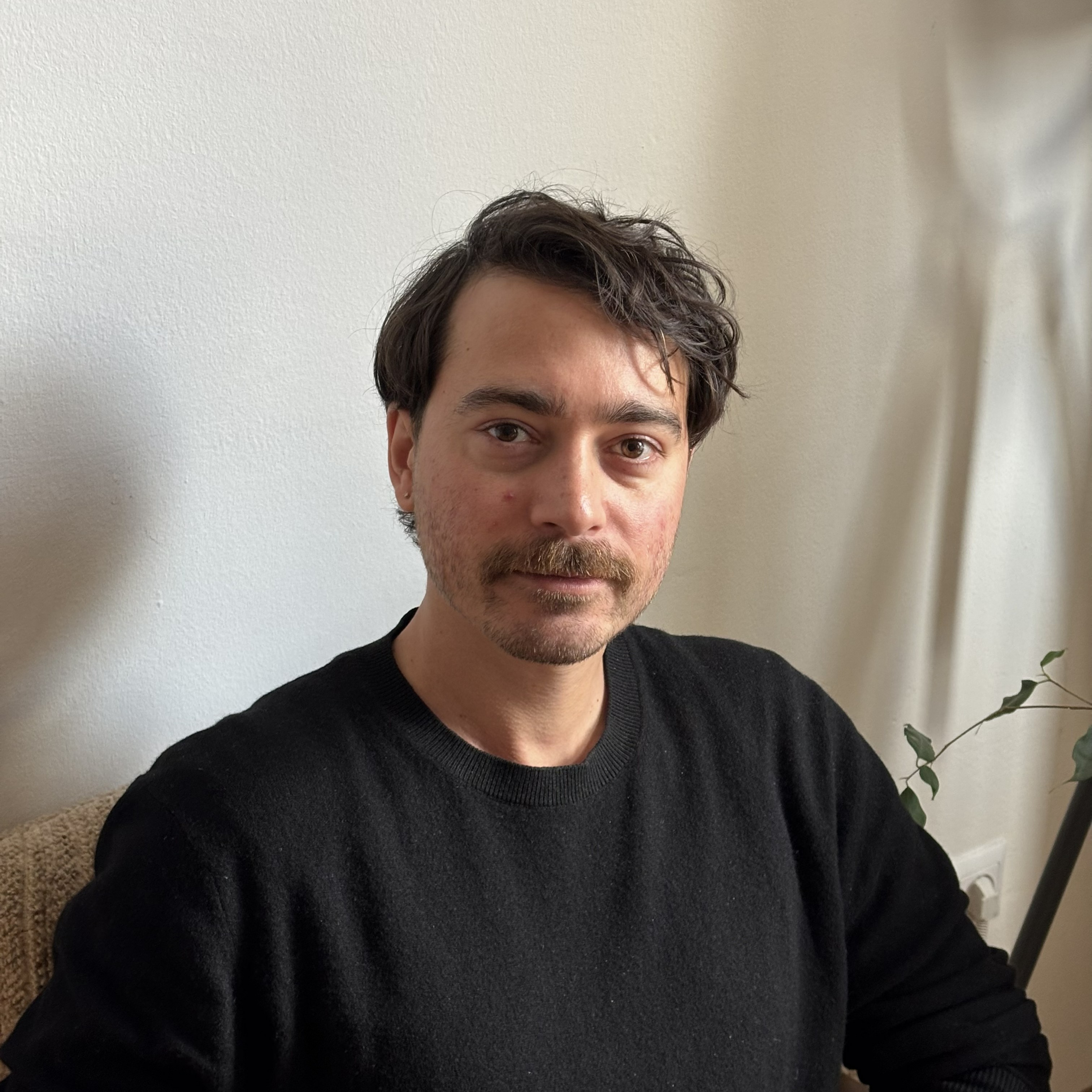
I work with musicians, writers, and other creative people building a life around their work. With autistic and ADHD adults. With people carrying anxiety, grief, or burnout. I'm based in Berlin. I see clients here in person, and online for anyone further afield.
I've lived and worked in Boston and Berlin, and building a life in a new country has shaped how I think about my work. I started my career teaching music at a community youth center, and seeing how lessons, ensembles, songwriting, and recording could build confidence, connection, and self-expression. That led me to become a board-certified music therapist in 2017.
I began my clinical work in a behavioral health hospital, running group sessions for adults living with depression, bipolar disorder, and other mental health conditions. From there I expanded into starting music programs in youth centers and recovery groups centered on creative expression, and eventually developed a creative arts therapy program for an outpatient cancer center. Each of these settings taught me how to structure a session around someone's actual needs rather than fitting a model onto a unique situation.
The question of how our environment shapes us eventually brought me to Berlin, where I pursued studies in cognitive neuroscience, researching how our surroundings and the sounds within them influence brain development and stress response. Today, I have my own private practice in Berlin, working with individuals one-on-one and hosting community music workshops, listening sessions, and arts programming. I'm especially drawn to experimental composition, the work of Cage, Reich, Lucier, and Radigue, and exploring how their approaches to sound can inform the therapeutic process.
Therapeutic Approach
Sessions are collaborative and trauma-informed, built around each person's pace rather than a fixed model. Alongside talk-based work, I draw on music-making, lyric analysis, songwriting, and improvisation as tools for exploring what's harder to reach in words alone. We start by naming goals together, and the work stays process oriented, music in service of those goals, session by session.
With musicians and creative professionals, this often goes further into experimental territory: chance operations, indeterminacy, Deep Listening, constraint-based exercises, drawing on my own years as a composer working across Boston and Berlin.
My practice is neurodivergent-affirming and queer-affirming. Sessions adapt to each person's sensory, cognitive, and communication needs, whether that means adjusting pacing, lighting, or how we talk through something.
Learn more about services on the online sessions page.
Education & Credentials
I hold a master's in cognitive neuroscience from Freie Universität Berlin and a bachelor's in psychology and music therapy from Berklee College of Music. I'm board-certified by the Certification Board for Music Therapists (MT-BC), which required a supervised clinical internship of over 1,000 hours and a national board exam, and requires ongoing continuing education to maintain. My graduate research looked at the impact of sound on stress using behavioral and neuroimaging methods, which grounds the clinical work in a direct understanding of how music affects the brain and nervous system.

Frequently Asked Questions
-
Jordan works primarily with musicians, writers, and other creative professionals navigating creative block, performance anxiety, or career instability, and with autistic and ADHD adults. He also works more broadly with people navigating anxiety, burnout, depression, grief, chronic illness, or significant life transitions. No diagnosis is required — many clients simply want a more creative or embodied approach to emotional wellbeing than traditional talk therapy offers. Sessions are neurodiversity-affirming and queer-affirming.
-
Jordan offers individual music therapy sessions on a weekly or bi-weekly basis, community music therapy groups for anyone in Berlin, and creative arts therapy for clinical settings. Adapted music lessons — guitar and small group ensembles tailored for neurodivergent learners — are also available. Individual sessions can be held in person in Berlin or online.
-
No musical experience is needed at all. Most clients come with little or no background in music. Sessions are built entirely around you — your comfort level, your interests, and your therapeutic goals. There are no right or wrong notes, and nothing to perform or get right. The music is a means, not an end.
-
In most cases it isn't a discipline problem, even though it tends to get treated as one. Creative block is usually protecting you from something — the risk of being judged, a fear that the work won't be good enough, sometimes grief about a version of your creative life you thought you'd have by now. Once that's clearer, the block often loosens on its own, without needing to be attacked directly.
-
Yes. All individual music therapy sessions are available online via a secure video platform, making them accessible from anywhere in the world. Online sessions are equally effective as in-person work for most clients. Jordan works with clients across Berlin, Germany, and internationally.
-
Jordan holds a master's in cognitive neuroscience from Freie Universität Berlin and a bachelor's in psychology and music therapy from Berklee College of Music. He is board-certified by the Certification Board for Music Therapists (MT-BC), a credential that requires a supervised clinical internship of over 1,000 hours and passing the national board exam. He maintains the credential through ongoing continuing education in music therapy, neurodiversity, and trauma-informed care.
-
The first step is a free 30-minute consultation, which you can book via the contact page directly. This call is an opportunity to ask questions, share what you're looking for, and get a sense of whether working together feels like a good fit, with no pressure or obligation to continue.